When Your Career Doesn't Fit the Person You're Becoming
There's a particular kind of career uncertainty that has nothing to do with dissatisfaction.
You might genuinely be good at what you do. You might have built something successful, earned the recognition you once wanted, created the stability you were working toward. And still, quietly, something doesn't feel right anymore. You catch yourself thinking I don't know if I want to do this anymore — not because anything is wrong, but because you've changed. The career that fit was built around an earlier version of you. As you move through life, the person you become can start needing something different from work. That's not a career failure. It's often just a sign the fit has changed.
Good Can Still Not Fit Anymore
One of the hardest parts of outgrowing a career is that there's often nothing obviously wrong with it. Good salary, supportive colleagues, an impressive title, years of experience — from the outside, it looks like something you should be grateful for. So when you start feeling disconnected from it, it's easy to turn the questioning on yourself instead: why am I unhappy when everything is fine? Am I being ungrateful?
But a career doesn't have to be bad for you to outgrow it. The life you built earlier reflected what mattered to you then — achievement, financial security, status, proving something to yourself. Those things may still matter. They just may not matter in the same way anymore.
You're Not the Same Person Who Started This Career
Most of us make some of our biggest career decisions relatively early — choosing what to study, where to work, what success even means — often before we've had much chance to understand who we're actually going to become. Then life happens. You gain experience, your relationship with money and ambition shifts, you learn what you're willing to sacrifice and what you're not. Eventually you might look at the career you built and think I don't think I'd choose this in quite the same way today.
That doesn't mean you made the wrong choice — you made it with the values and identity you had at the time. But identity isn't fixed, and when you change, what you want from work tends to change with it.
Being Good at It Doesn't Mean You Have to Keep Doing It
This is one of the more confusing parts. You can be genuinely excellent at a career you no longer want — still getting great results, still the person everyone relies on, still receiving recognition, even still enjoying parts of it — while something underneath keeps saying I don't think this is where I want to spend the next ten years.
We're often taught to treat competence as a reason to stay: you're good at it, you've invested so much time, why leave? But being good at something and wanting to keep doing it are two different things. Your ability doesn't determine your direction. Sometimes one of the clearest signs you've outgrown something is simply that you're no longer interested in using your strengths the same way.
What You've Outgrown Might Be the Definition of Success
Your career is usually built around a particular idea of what a successful life looks like — for a while, maybe that meant progressing, then leading, then earning more, then reaching a certain position. At some point you may notice you're no longer motivated by any of it. Maybe you want more freedom, more meaning, more creativity, a slower pace, or work that fits around your life rather than the other way around. Or maybe you just want something you can't quite name yet.
This is where career questioning tends to go deeper than a job search. The real question isn't "what job should I do next" — it's "what does a successful life actually mean to me now." That one takes longer to answer, and that's fine.
The Identity Attached to Your Career Is the Hard Part to Lose
After years in one career, the work becomes part of who you are — not just someone in a particular industry, but "the ambitious one," "the expert," "the person who can handle anything." Your career gives you a sense of competence and certainty about who you are. So when you start questioning it, you're not only questioning the work. You're questioning a version of yourself you've spent years building.
That's why this kind of change can feel surprisingly emotional even when you're intellectually certain you want something different. Part of you is still attached to who you've been, while another part is starting to recognize you can't stay there forever.
You Don't Have to Know What You Want Instead
This is where a lot of people get stuck — they realize their career no longer fits and immediately expect themselves to know what should replace it. But there's often real space between "I don't want this anymore" and "I know what I want instead." You might know exactly what you don't want, and still have no clarity on the alternative. That doesn't mean you're not ready for change. It usually just means you're still understanding who you're becoming.
This is also where forcing a decision too fast can backfire — you end up taking the first thing that offers relief from the old career, and relief isn't the same as alignment. Instead of rushing to fix it, it helps to get curious first: what exactly no longer fits — the work itself, the environment, the pace, the identity attached to it, or simply who you've become? What matters to you now that didn't before? What are you no longer willing to trade for success? These questions aren't about landing on a perfect answer immediately. They're about making sure your next decision comes from the person you're becoming, rather than just the urge to escape what no longer fits.
You Don't Have to Start From Zero
Outgrowing your career doesn't mean throwing away everything you've built. Your experience, skills, relationships, and everything you've learned along the way come with you — even the parts of the job you didn't like can teach you something about what you actually want. A pivot isn't necessarily about abandoning everything that came before. It's closer to asking what do I want to carry forward, and what am I ready to leave behind — a very different question from starting over.
Your Career Doesn't Have to Fit the Person You Used to Be
The career you built may have been exactly right for an earlier version of you — it may have given you security, confidence, and experience you couldn't have had otherwise. You don't have to regret any of that to want something different now. You're allowed to evolve. Sometimes the discomfort you're feeling isn't telling you that you've failed at your career. It's telling you that the person who built it is changing.
So the next question isn't really "what career should I choose." It's something a little deeper — "who am I becoming, and what would work look like if it actually fit that person?" You don't need the whole answer yet. But once you start asking it, you're no longer just trying to escape the career you've outgrown. You're beginning to understand what you're actually moving toward.

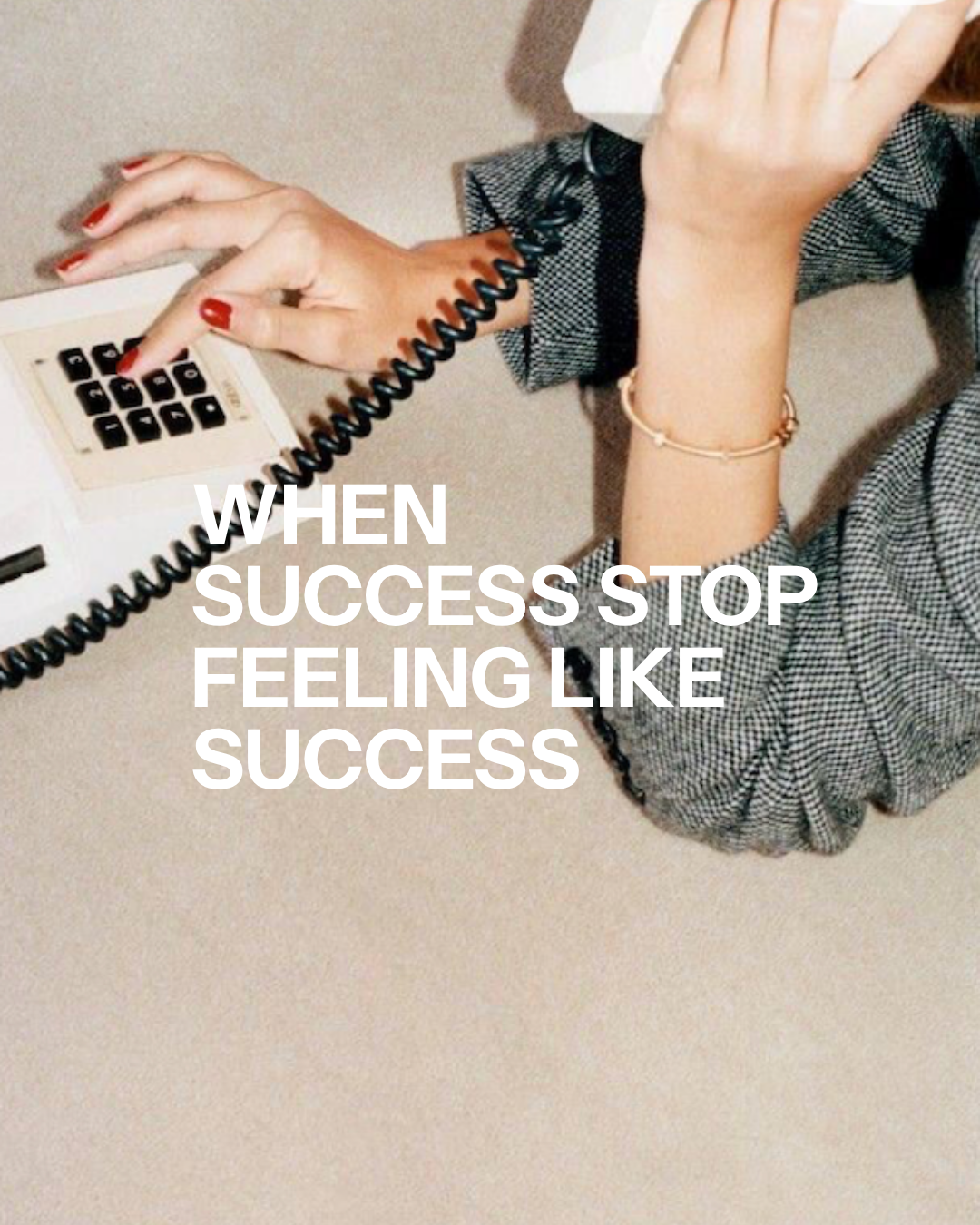

We tend to talk about career change as if something has to go visibly wrong before we're allowed to want something different. But careers, like the rest of a life, evolve with the person living them.